Getting locked out is stressful, and that stress is exactly what a ghost locksmith scam feeds on. These scams often look like normal “local” listings, but the business behind them can be hard to trace, hard to hold accountable, and quick to push risky decisions. The danger isn’t just money—there can be real vehicle/property security risks if someone drills unnecessarily, swaps hardware, or leaves you with a weak setup.
This guide is built to help you spot the signs of a ghost locksmith in Hamilton, NJ before you get trapped. You’ll learn how to spot a fake locksmith using a simple locksmith scam checklist, what to ask before anyone arrives, and how to verify a real locksmith when you’re searching “fake locksmith near me” under pressure. The goal is straightforward: avoid locksmith scams with calm, practical safeguards—and if you’ve already been burned, know exactly what to do next.
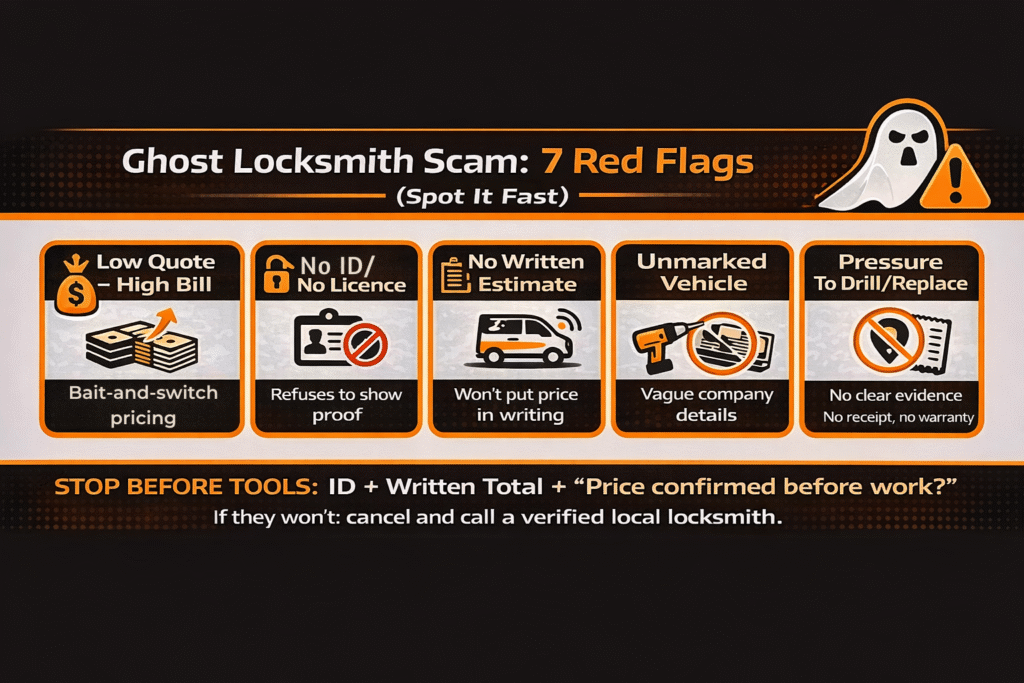
Quick Scan Table: Ghost Locksmith Scam Red Flags
| Sign (What You’ll Notice) | Why It’s Risky | What To Do On The Spot |
| Bait-And-Switch Pricing (low quote → high bill) | No accountability; an unknown person handling your security | Ask for a written total and stop work if it changes |
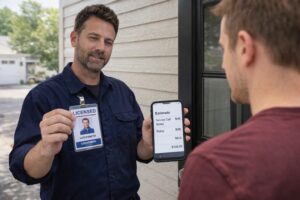
| No Licence/ID or refuses to show it | No accountability; an unknown person is handling your security | Request ID/company proof; cancel if they refuse |
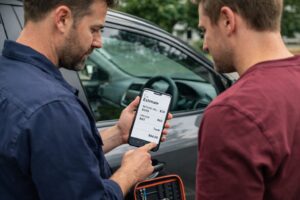
| No Written Estimate Before Work | Easy to inflate charges later with “you approved it” claims | Require a written estimate; no tools until you approve |
| Unmarked Vehicle / Vague Company Details | Hard to trace the business; often a call-center dispatch | Confirm business name + local address match; stop if vague |
| Pressure Tactics + Aggressive Upselling | Fear-driven decisions lead to unnecessary drilling/replacement | Ask for evidence + options; pause and get a second quote |
| Cash-Only, No Invoice, No Warranty | Little proof for disputes; weak follow-up support | Use traceable payment and demand an invoice/warranty |
| No Real Local Presence (address mismatch) | You can’t follow up, report, or claim warranty support | Verify the address and choose a licensed local locksmith |
What “Ghost Locksmith” Really Means
A “ghost locksmith” usually isn’t a real certified locksmith business you can trace or hold accountable. It’s often a call center setup that answers under a generic name, takes your details, then sends whoever is available—sometimes from far away—with no clear proof of who they work for. That’s why call centre locksmith scams keep working: the person on the phone and the person who shows up may not be connected to a real, verifiable company.
Here’s the simple test: a legitimate locksmith can show traceability. A ghost locksmith scam usually can’t. You’ll notice signs like generic phone numbers, no physical business address you can verify, and no licence proof or clear company ID when asked. And after the job, there’s often no warranty trail—no proper invoice, no support line that actually helps, and no real business presence you can contact. That’s the core of “ghost locksmith tactics explained”: they stay hard to track, so it’s hard for customers to dispute charges or report the fake locksmith listing effectively.
Why This Scam Keeps Happening (And Why It Works)
Ghost locksmith scams keep happening because they hit people at the worst moment—when you’re locked out, stressed, and looking for the quickest fix. That urgency makes an emergency lockout scam or urgent locksmith scam feel “normal,” even when the signs are off. These operators lean on pressure tactics and upselling to push fast decisions, and the consumer safety risks get ignored because you just want back inside.
- Urgency Trap: Lockouts force rushed choices.
- Speed Promise: Scammers offer “instant” help to win the call.
- Fear Push: They use a ghost locksmith scam warning vibe to control the conversation.
- Pressure Upsell: “Must replace” claims drive bigger bills.
- Low Verification: People skip ID, licence, and estimate checks.
- High-Stress Blind Spot: Safety and proof get overlooked in the moment.
The 7 Signs You’re Dealing With a Ghost Locksmith
Ghost locksmith scams keep working because they catch people in high-pressure moments. When you’re locked out, you want emergency locksmith services, not a long check process. Scammers use that urgency to slip in fake locksmith red flags, then steer the job toward bait-and-switch pricing or cash-only payment demands. The goal of this section is simple: show the signs of a ghost locksmith, explain why each one is risky, and give a clear action you can take on the spot using a locksmith scam checklist.
Bait-and-Switch Pricing
This is the most common locksmith overcharging scam. You call, get a low quote, and feel relieved. Then the tech arrives and the price jumps fast, often blamed on “special locks” or “extra labour.” That inflated pricing on arrival is a classic bait-and-switch pricing move. It works because people don’t want to start the search again while stuck outside. Your action: stop and ask for the quoted vs final price in writing before any work starts. If they won’t do that, end the job and call someone else.
No Licence/ID or Refuses to Show It
Identity avoidance usually means accountability avoidance. A legitimate provider can do a basic licence check or show company ID without drama. A scammer often deflects, gets annoyed, or says “it’s in the car” but never brings it. These are unlicensed locksmith warning signs and they matter because you are letting a stranger touch your door, locks, or vehicle. Your action: ask for ID and proof of the company name before they begin. If they refuse, do not allow any work to start.
No Written Estimate Before Work
If there is no written quote, there is no control. Without a clear estimate, a scammer can change the price later and claim you “approved it.” That’s why a lack of written estimate is on every locksmith scam checklist. Your action: ask for a pre-work estimate that lists the call-out fee, labour, and parts. Also ask what would cause the price to change, and require your approval before any change. If they won’t provide that, stop the job.
Unmarked Vehicle / Vague Company Details
A ghost locksmith often arrives in unmarked service vehicles and gives vague answers like “I’m just the guy they sent.” You may also notice generic phone numbers and an unknown dispatcher who won’t confirm a real business address. This is part of ghost locksmith tactics explained: keep everything blurry so you cannot trace them later. Your action: ask for the full business name, local address, and a matching invoice header. If the details don’t match, do not proceed.
Pressure Tactics + Aggressive Upselling
Scammers use pressure tactics and upselling because fear makes people agree faster. They may say “your lock is unsafe” or “we have to drill” without showing clear evidence. This creates consumer safety risks too, because unnecessary drilling or cheap replacement parts can reduce your real security. Your action: slow it down. Ask for a simple explanation of the issue and at least one alternative option. If they refuse and keep pushing, stop work and get a second opinion.
Cash-Only, No Invoice, No Warranty
Cash-only payment demands remove your protection. If there is no invoice or warranty, it becomes hard to dispute the charge or prove what work was done. This is a major sign to watch when avoiding locksmith scams. Your action: pay only with a traceable method when possible, and require a proper invoice that lists the company name, date, work done, parts used, and total price. If they refuse a receipt, a refusal or a warranty refusal happens, walk away.
No Real Local Presence
Many ghost locksmith listings look local but are not. You may see a business name online, but there is no physical business address you can verify, or the address is a random building that does not match a locksmith shop. This hurts you later if something goes wrong. Your action: do a quick local locksmith verification. Ask for the address and check that it matches the company name. A real local provider will not hide this. If they won’t confirm business address proof, choose a licensed local locksmith instead.
How to Verify a Real Locksmith (Before They Arrive)
Before anyone shows up, you can do a quick screen that saves you from most scams. If you’re wondering how to verify a real locksmith, don’t overthink it—ask a few direct questions and listen for clear answers. A real, licensed local locksmith won’t get offended by basic verification. A ghost operator usually gets vague, rushy, or defensive.
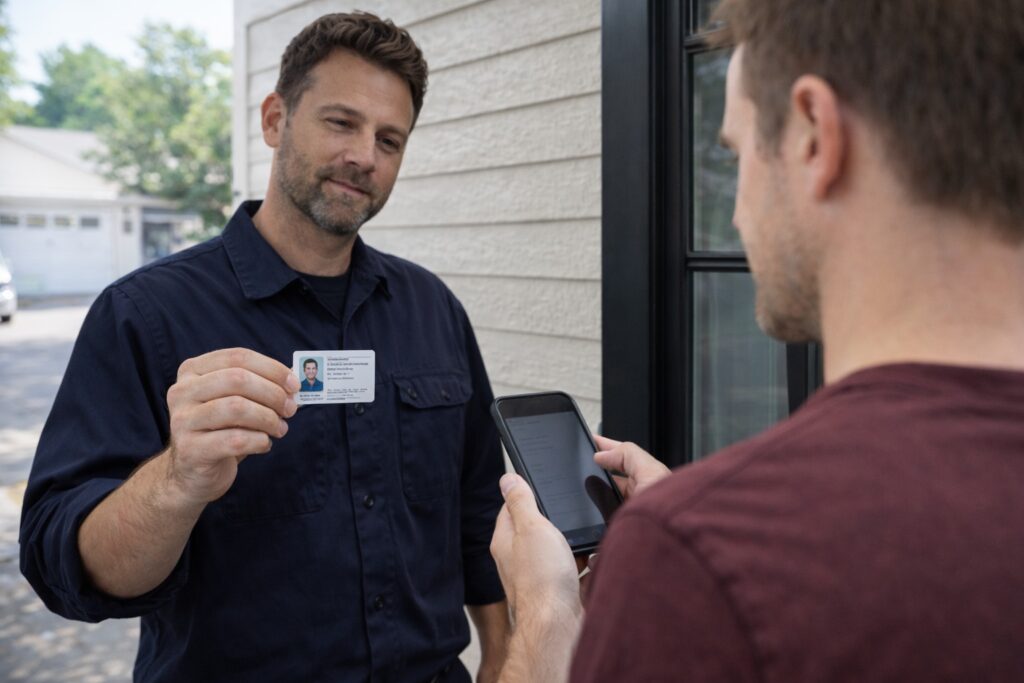
This is the simplest way to verify locksmith details before you’re under pressure at the door. The goal is to choose a licensed local locksmith you can trace, not a random dispatch number that disappears after payment.
- Full Business Name: Ask for the exact company name they operate under.
- Local Address: Request a real, verifiable business address (not “we’re mobile only” as an excuse).
- Licence / Registration: Ask what they carry and if they’ll show it on arrival.
- Written Estimate Policy: Confirm they provide a price range or written quote before work starts.
- Payment Methods: Ask if they accept card and provide a proper invoice.
- Call-Back Test: Ask for a direct number and confirm it reaches the same business name.
What to Ask at the Door (Before Work Starts)
Right at the door is where most people get trapped—because once tools come out, it’s harder to stop the job. Use a simple locksmith scam checklist before any work starts. A real pro will respect it. If you see a locksmith without identification or they push back on basic questions, that’s your sign to pause.
Your goal is control: ID first, then pricing in writing, then clear estimate approval. If anything feels slippery, you use a stop work policy and call someone else.
- Show ID and Company Proof: Name, company, and licence/registration if your area uses it.
- Written Estimate Before Tools: No work starts until the price is written.
- Confirm Total Price Range: Ask what would change the price and by how much.
- Authorization to Proceed: Make them say, “We start only after you approve.”
- Parts Approval Rule: No lock change or parts swap without your okay first.
- Stop Work Policy: If the price changes or they refuse details, stop the job immediately.
What to Do If You Hired a Fake Locksmith
If you think you’ve been scammed, focus on two things: contain the damage and restore your security. A fake job isn’t only about money—there can be property and vehicle security risks if parts were swapped, keys were copied, or your lock was left weak. Even if there’s no invoice or warranty, you still have steps you can take.
Here’s what to do if you hired a fake locksmith: document everything, dispute what you can, report it, then get your home or vehicle checked by a trusted professional so you’re not living with a hidden risk.
- Document Everything: Photos, texts, call logs, names, vehicle plate, and the work done.
- Save Any Proof: Receipts, screenshots, and any “quote” they sent—even if it’s vague.
- Dispute The Payment: If you paid by card, start a chargeback process right away.
- Report The Scam: File a report locksmith scam complaint with local consumer channels and the listing platform.
- Re-Secure Your Locks: Rekey or replace if the work looks suspicious or parts were changed.
- Get A Second Opinion: Have a licensed locksmith inspect for damage, weak installs, or compromised keys.
FAQs
To verify a real locksmith, ask for the full business name, a local address you can confirm, and what ID or licence they will show on arrival. A licensed local locksmith will also explain pricing clearly and provide a written estimate policy. If the answers are vague or rushed, treat it as a locksmith scam warning.
The biggest fake locksmith red flags are a very low quote, refusal to give a price range, and a generic business name that sounds like a listing—not a company. If they won’t share an address, won’t explain how pricing works, or keep pushing you to “book now,” it’s time to slow down and focus on avoiding locksmith scams.
This usually points to bait-and-switch behavior. Scammers quote low to win the call, then raise the price on arrival with pressure and confusing reasons. A real locksmith will explain what drives the price and will not start work without your approval in writing.
Stop the job immediately and ask for a written estimate before any work continues. If they refuse or get aggressive, end the service call and contact another provider. This is one of the clearest locksmith scam warning signs because it removes your control over the final bill.
Cash-only isn’t always a scam, but it becomes a red flag when combined with other signs—like no invoice, no warranty, no business address, or no ID. If they insist on cash and won’t provide a proper receipt, you should treat it like a fake locksmith red flag and choose a licensed local locksmith instead.
Conclusion
Ghost locksmith scams only work when you’re rushed and unprepared, so the best protection is a simple process. Use the locksmith scam checklist, ask for ID and a written estimate, and don’t let anyone start work without your clear approval. If something feels off—bait-and-switch pricing, cash-only demands, or no proof of a real local business—stop the job and choose a licensed local locksmith instead. And if you already hired a fake locksmith, document everything, dispute the payment if you can, and re-secure your home or vehicle so you’re not left with a hidden security risk.