It usually starts the same way. You’re locked out, your key is missing, or you just moved into a new place, and you’re thinking, “Who else might still have a copy?” In that moment, it’s easy to call the first number you see and hope for the best. But this is access work, and the wrong choice can turn into a consumer safety problem, surprise charges, or a security gap you don’t notice right away.
This guide gives you a clear licensed vs unlicensed locksmiths without any legal talk. You’ll learn why locksmith licensing matters, what risks to watch for, and how to verify locksmith credentials in minutes. The goal is simple: help you choose a reliable locksmith with real professional accountability, avoid scams, and feel confident you hired a reputable provider.
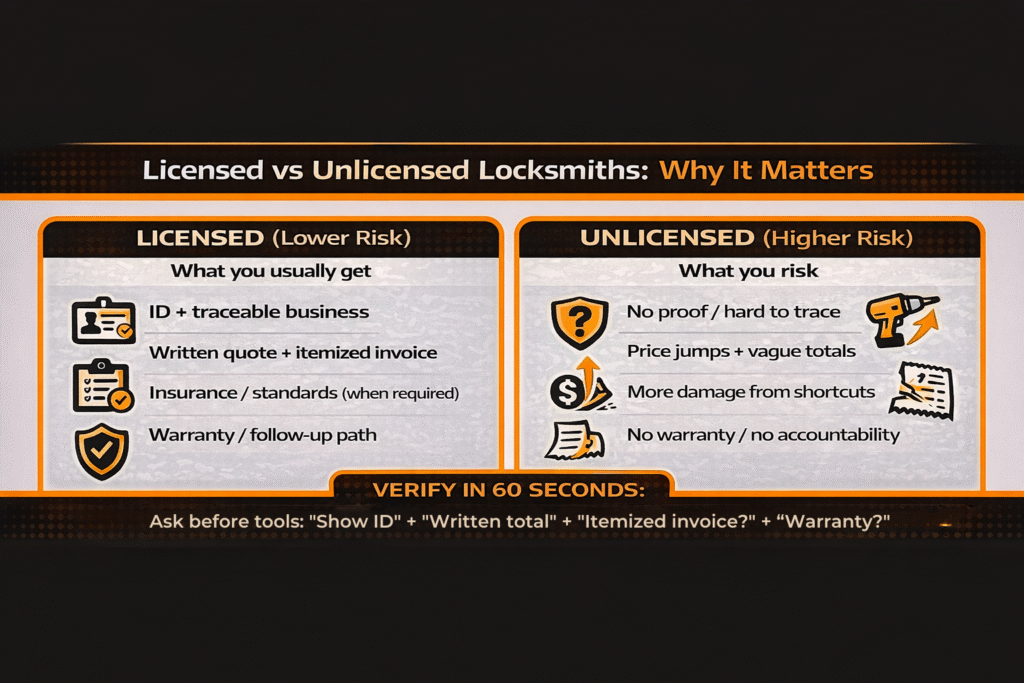
Quick Answer: What You Gain With Licensed Work
When you hire a licensed locksmith, you’re buying peace of mind, not guesswork. Licensed usually means the work follows professional locksmith standards, pricing is clearer, and you’re more likely to get proof of the job, proper compliance standards, and a service warranty. Unlicensed often means you’re trusting a stranger with access and hoping the price and quality stay fair. That’s why the benefits of licensed locksmith services matter when the job affects your security.
What you usually gain with licensed work (one-screen view):
- Proof & accountability: a trusted locksmith can show who they are and who they work for
- Pricing transparency: clearer quotes and fewer “surprise” add-ons
- Insurance and standards: better protection if something goes wrong
- Warranty support: a qualified locksmith with warranty terms you can rely on
- Complaint options: a real path to follow if the service isn’t right
What Licensing Does Not Guarantee
A license is a baseline. It does not automatically mean the locksmith is the best, the cheapest, or perfect every time. It simply raises the chance that you’re dealing with someone who can be held responsible for car key repair and replacement. That’s why smart customers still look for trust signals in locksmith services before they book. If you want to avoid stress, treat licensing like step one, not the final answer.
To choose a reliable locksmith, use a quick locksmith verification checklist: check recent reviews, ask for a written quote, confirm identity verification when they arrive, and request insurance proof if they claim they’re covered. These small checks help you spot problems early and support better locksmith credentials and verification—especially when someone is about to work on your car keys, home locks, or business entry points.
What “Licensed Locksmith” Means
A licensed locksmith is simply a locksmith who has legal permission to do locksmith work under local rules. That permission usually connects to locksmith licensing laws and compliance standards—meaning there are basic requirements to meet and a way to hold the business accountable if something goes wrong. Since locksmith regulations by state can differ, a smart move is to do a quick locksmith license check in your area instead of assuming the rules are the same everywhere. This is exactly why locksmith licensing matters.
What “licensed” often points to (practical signs):
- Standards: work that follows basic professional rules
- Checks: some level of screening or requirements
- Accountability: clearer responsibility if there’s damage or disputes
What “Unlicensed” Usually Means
An unlicensed locksmith isn’t always a bad person, but it often means there’s no easy way to confirm training, insurance, or responsibility before you hand over access to your car or home. That’s where unlicensed locksmith risks show up. The chances of price games, rushed work, or poor parts can go up—especially when someone sells themselves as the “cheap locksmith vs licensed locksmith” option. If you can’t verify proof, the locksmith trust and security risks are real, and fraud prevention becomes much harder after the job is done.
Why This Matters: Locksmith Work Is Access Work
Locksmith work is access work, which means it touches your safety, privacy, and property in a real way. A locksmith can handle keys, key codes, locks, and entry points for your car, home, or business. If the wrong person does the job—or the job is done carelessly—you can end up with security breaches that are hard to spot until it’s too late. This is where locksmith trust and security risks become a real consumer safety issue, not just a “service choice.”
- Car access: smart keys and ignitions affect home and vehicle access security
- Home entry: lock changes and rekeying can prevent unwanted copies
- Business doors: staff access needs control and records
- Key codes & programming: identity verification matters before any work starts
- Bad work = gaps: weak setups can create locksmith security risk
- Proof protects you: consumer protection in locksmith services starts with a secure locksmith service
Risks of Hiring an Unlicensed Locksmith (Risk Map)
When you hire an unlicensed locksmith, you’re not just saving money—you’re taking on extra risk. The easiest way to see it is a simple risk map with clean buckets: security, pricing, damage, and after-service. Each one answers two questions: what can go wrong, and what it can cost you. These unlicensed locksmith risks show up fast during lockouts and key work, which is why fraud prevention matters before the job starts, not after.
This is also where unlicensed locksmith scams often sit: you don’t get clear proof, you don’t get pricing transparency, and you don’t get a service warranty you can rely on. If you know the buckets, you spot locksmith scam signs early instead of learning the hard way through a locksmith overcharge or a locksmith damage risk you didn’t expect.
Risk 1 — Security and Privacy Gaps
Access work needs trust. With an unlicensed locksmith, keys and key codes can be handled carelessly, copied without clear controls, or shared with the wrong person. That creates security breaches you may never notice until something goes missing or your lock “mysteriously” stops being safe. Rekey security is also a big one—if rekeying is done wrong, old access can still work, which defeats the whole purpose.
This is why locksmith trust and security risks are not just theory. Home and vehicle access security depends on proper steps, proper parts, and proper identity verification before any work starts. If someone can’t show proof of who they are and why they’re there, even a smart lock setup risk becomes real.
Risk 2 — Price Tricks and Surprise Charges
A common pattern is “starting from” pricing with no clear scope. The quote sounds low on the phone, but once the locksmith arrives, the price jumps through add-on fees you weren’t told about. If you’re stressed and locked out, it’s easy to say yes just to get it over with. That’s how “licensed locksmith vs cheap locksmith” becomes a costly lesson.
The biggest warning sign is when there’s no itemized invoice and no clear receipt. Without pricing transparency, you can’t compare the locksmith quote vs final bill, and consumer protection in locksmith services becomes harder. Good fraud prevention starts with a written quote and clear terms before work begins.
Risk 3 — Property Damage From Poor Tools or Skill
When skill and tools are unknown, avoidable damage becomes more likely. That can mean drilling when it isn’t needed, scratching trims, breaking a lock body, or causing ignition damage on a car. Even if the door opens, you can end up paying again for broken lock repair—or replacing parts that should have been saved.
This is where professional locksmith standards and compliance standards matter in real life. A careful locksmith looks for the least damaging method first. A rushed or untrained one may take shortcuts that leave you with door lock damage and a bigger bill later.
Risk 4 — No Warranty and No Clear Responsibility
After the job, this is where many people get stuck. If there’s no written warranty, no follow-up support, and no clear business details, you have little leverage if the lock fails, the key stops working, or the workmanship is poor. A locksmith guarantee isn’t just “nice to have”—it’s what protects you when something needs fixing.
A licensed provider is more likely to offer a service warranty and act like an accountable locksmith because their name and business details are tied to the work. Without that, consumer protection in locksmith services drops, and disputing charges or quality becomes a long and stressful process.
Benefits of Licensed Locksmith Services
Licensed locksmith work is not about fancy words. It’s about outcomes you can feel right away: safer access, better cost control, and more reliable results. When you choose a reputable locksmith, you usually get clearer pricing transparency, stronger professional accountability, and a service warranty that doesn’t disappear after the job. These benefits of licensed locksmith services matter most when the work affects your car, home, or business entry.
A trusted locksmith service also makes it easier to verify what was done and who did it. That lowers stress and helps you avoid avoidable problems later. In plain terms, you’re paying for a job that is easier to trust, easier to prove, and easier to fix if something goes wrong.
Benefit 1 — Clear Standards and Better Work Quality
A licensed locksmith is more likely to follow professional locksmith standards and basic compliance standards. That matters because locksmith work is not guesswork. Rekeying, lock changes, and car key programming need correct steps and the right tools. When a qualified locksmith uses proper methods, you reduce the chance of damage, weak security, or a key that fails a week later.
This is the biggest “daily life” benefit: fewer mistakes. Less drilling when it isn’t needed. Fewer broken trims. Fewer problems that force you to pay twice. Good standards are not about being perfect. They are about lowering risk on the jobs that protect your access.
Benefit 2 — Insurance, Liability, and Bonding (When Available)
Insurance is simple: it can help cover damage or errors if something goes wrong during the job. That’s why insured locksmith services matter. If a door, lock, or car part gets damaged, insurance and liability support can reduce your loss. Some providers are also an insured and bonded locksmith, which adds another layer of protection depending on local rules and the type of work.
Not every area requires the same coverage, so don’t assume. Ask for locksmith insurance proof if they claim they are insured. A real insured locksmith should be able to explain what is covered, what is not, and what you will receive on the invoice.
Benefit 3 — Background Checks and Trust Controls (Where Required)
Locksmith work involves access. That’s why background checks for locksmiths and identity verification matter in many regions and job types. When rules require background-checked technicians, it reduces the risk of unknown operators handling your keys, codes, or entry points. This is not about fear. It’s about sensible control when someone is opening your car, your home, or your workplace.
If you want a verified locksmith technician, look for clear locksmith credentials and verification. Ask who is coming, what company they represent, and what ID they will show on arrival. These are basic checks that protect your safety and privacy.
Benefit 4 — Paper Trail: Quotes, Receipts, and Warranty
Proof protects the customer. With a licensed provider, you’re more likely to get an itemized locksmith quote before work starts, a clear locksmith receipt after the job, and simple warranty terms you can use later. This is where pricing transparency and professional accountability show up in a real way. If the final bill doesn’t match the quote, an itemized invoice makes disputes easier to handle.
A locksmith warranty policy also matters after the job. If a lock sticks, a key fails, or a part needs adjustment, you have a clear path to follow. That is basic consumer protection in locksmith services—and it’s one of the strongest reasons people choose licensed work.
Licensed vs Unlicensed by Job Type (Only What Changes)
The risk isn’t the same for every locksmith job. A car key job can affect whether your vehicle starts. A home rekey job decides who can still enter your house. A business job can change access for staff and keys for years. That’s why “licensed vs unlicensed” matters more once you look at the job itself.
When you’re choosing a reliable locksmith, ask for proof that matches the work. The goal is simple: protect your home and vehicle access security, reduce consumer safety risks, and avoid mistakes that turn into bigger bills.
Quick “Proof to Ask For” Cheat Sheet
| Job type | What’s different here (unique risk) | Key proof to ask for (before work starts) | What to get after the job |
| Car keys & modern vehicles (automotive locksmith) | Transponder keys, smart keys, and immobilizer systems. Bad work can trigger a no-start problem or create ongoing glitches. | Identity verification (who is at your car), confirmation they do car key programming for your key type, and clear locksmith credentials and verification (company details + written price scope). | Itemized receipt listing what was programmed and any parts used, plus basic support terms if the key fails soon. |
| Home locks, rekeying & entry doors (residential locksmith) | Rekeying is meant to remove old access. Poor work can leave hidden access risks and possible security breaches. | Clear scope: rekey vs lock change, number of cylinders, total price in writing, and confirmation they’ll provide a proper receipt and service warranty terms. | Itemized invoice showing what was rekeyed/changed, plus warranty details and any key count notes (if provided). |
| Business doors, master keys & access control (commercial locksmith) | Higher responsibility. Staff access changes, and weak records can break control over time. Needs consistency and compliance standards thinking. | Proof that they handle master key system/access control locksmith work, and that they document changes. Ask how they keep things consistent and who is accountable. | Written documentation of what changed (locks/keys/access), an itemized invoice, and clear follow-up terms tied to the work. |
How to Check If a Locksmith Is Licensed (Simple 3-Stage Checklist)
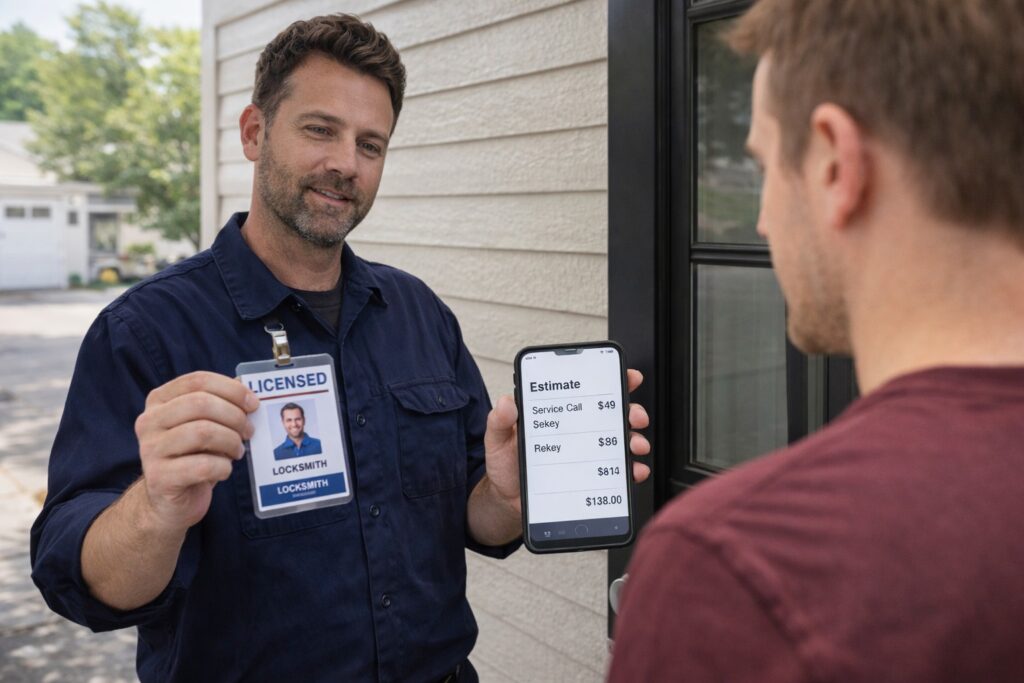
When you’re locked out or stressed, it’s easy to pick the first number you see. This simple 3-stage checklist helps you slow down for one minute and choose a reliable locksmith. The goal is not to “play detective.” It’s to get basic locksmith credentials and verification, avoid price games, and make sure the person showing up is real. If you can’t verify locksmith license details where you live, you can still check identity, quotes, and proof.
Think of it as a reputable locksmith checklist you can use every time: before you book, when they arrive, and after the job. These steps support pricing transparency and help you spot trust signals in locksmith services without wasting time.
Stage 1 — Before You Book
Before you share your address, screen out risk early. Ask how to check if a locksmith is licensed in your area and request a license number if your region uses one. Then verify the business name and address, not just a phone number. If they say they offer insured locksmith services, ask for insurance proof—real providers won’t get annoyed by that. Finally, use a locksmith quote checklist: get a written quote range with conditions (lock type, after-hours, parts), so the price can’t “change” once they arrive.
- License / proof: locksmith license number check (if applicable)
- Business check: verify locksmith business name + address
- Quote in writing: pricing transparency before you commit
Stage 2 — When They Arrive
At the door or at your car, confirm the person matches the business you spoke to. Do a quick locksmith ID check and basic identity verification. If they use company branding, check that it looks consistent, but don’t rely on branding alone. Then confirm the quote again before work starts, especially if they suddenly add new fees. A reliable locksmith won’t rush you or use pressure tactics. That behavior is one of the biggest red flags, even if they claim they’re licensed.
- Match the details: name, company, and phone number should line up
- Confirm the price: agree on scope before tools come out
- No pressure: walk away if they push or threaten extra charges
Stage 3 — After the Job
After the job, get proof that protects you. Ask for an itemized invoice (not a vague total), and keep it for your records. Confirm locksmith receipt details like parts used and work completed. Get warranty terms in simple writing—this is where service warranty and professional accountability show up. If parts were replaced, it’s reasonable to ask for old parts back when possible. These steps support consumer protection in locksmith services and make follow-up support much easier if something fails later.
- Paper trail: itemized invoice + receipt
- Warranty: locksmith warranty details in writing
- Accountability: clear business details on the invoice
Phone Script: What to Ask in 60 Seconds
When you’re locked out, the phone call is where most scams start. This 60-second script helps you slow things down and check the basics before you share your address. The goal is simple: confirm locksmith credentials and verification, lock in pricing transparency, and make sure you’re choosing a reliable locksmith with real professional accountability.
Copy these questions to ask a locksmith and use them every time. If they dodge the answers, rush you, or refuse proof, treat it as a warning sign and call someone else.
- License check: “How do I check if a locksmith is licensed in my area, and what’s your license number if required?”
- Business proof: “What’s your business name and address, and who will be coming out today?”
- ID on arrival: “Will the technician show ID and match the company details?”
- Quote rules: “What’s the total price range, and what could make it change?”
- Invoice proof: “Will I get an itemized invoice with parts and labor?”
- Insurance proof: “If you’re insured, can you show proof of insured locksmith services?”
If You Suspect a Scam or Bad Work (What to Do Next)
If you think you’ve been hit by an unlicensed locksmith scam or bad work, don’t panic. The goal is to stay calm, collect proof, and follow a simple recovery path. Good consumer protection in locksmith services starts with records. With photos and paperwork, it becomes easier to dispute a locksmith overcharge and report the issue in a way that gets attention.
Act quickly while details are fresh. Focus on fraud prevention steps that protect your money and help others avoid the same problem. Keep everything in one folder so you can share it if needed.
- Save proof: take photos of the lock, any damage, the vehicle/door area, and the work result
- Keep documents: invoice, receipt, quote texts, and the full price breakdown for pricing transparency
- Capture contact info: phone number used, business name shown, and the listing link you found
- Dispute charges: if the bill is unfair, start a locksmith overcharge dispute through your card/bank when appropriate
- Report it: report locksmith scam listings to Google, the ad platform, and any marketplace site used
- Contact local bodies: file a complaint with local consumer bodies to support consumer protection in locksmith services
FAQs
The biggest risks of hiring an unlicensed locksmith are security gaps, surprise charges, and poor workmanship. Rekeying done wrong can leave old access working, and sloppy key work can fail later. Price games are also more common when there is no pricing transparency, no service warranty, and no clear way to hold someone responsible.
Unlicensed locksmiths often quote very low prices to get you to book fast, especially when you’re stressed. The quote may be “starting from” with no clear scope, then extra charges show up after arrival. That is why pricing transparency matters. A reliable locksmith can explain the total range and what could change it before work begins.
An insured and bonded locksmith is a provider who carries coverage that may help if there is damage, errors, or certain losses during the job. Coverage types vary by location and provider, so you should ask for locksmith insurance proof if they claim it. This simple step supports consumer protection in locksmith services and reduces your risk.
An unlicensed locksmith may be able to copy or program keys, but that does not mean the work will be safe or correct. Modern cars use transponder chips and immobilizer systems, and bad work can lead to “no start” issues. For consumer safety, ask for identity verification, confirm experience with your key type, and choose locksmith credentials and verification you can trust.
If the final price is higher than the quote, ask them to stop and explain the change before they continue. Request an itemized breakdown and compare it with what you agreed to in writing. If the extra charges do not match the quote terms, you can refuse the added fees. This helps avoid a locksmith overcharge dispute later.
Conclusion
Choosing between a licensed and unlicensed locksmith is not just about price. It’s about who you’re trusting with access to your car, your home, or your business. A licensed provider is more likely to follow professional standards, give clear pricing, and back the job with a receipt and warranty. Before you book, take one minute to verify the business, confirm the quote in writing, and check ID on arrival. If anything feels off or the proof isn’t there, walk away and call someone else.