Skip to content
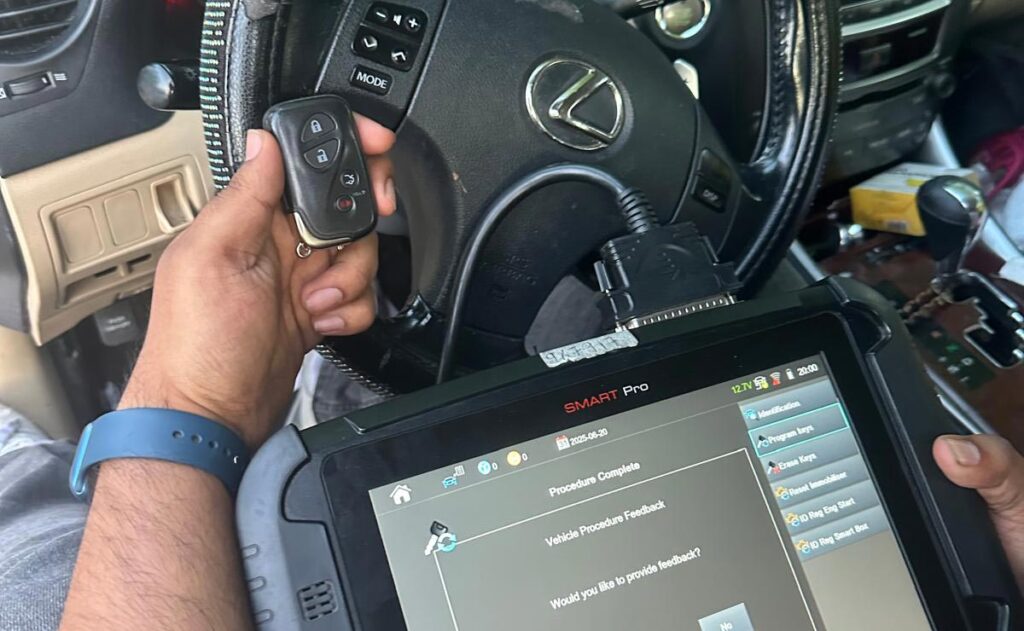
Ever wonder why your car key looks bulkier than the old-school metal ones? That’s because it’s probably a transponder key—a small upgrade with a big job. It doesn’t just unlock your doors—it talks to your car and helps keep it safe from theft.
Transponder keys have become standard in most cars manufactured since 2000. This type of key is an integral security feature of most cars, helping prevent theft. If you don’t currently have a transponder key or you need adjustments to your key, there are plenty of options in the Morrisville, PA area for car key chip programming, including the experts at Car Keyline. If you’re not familiar with what exactly a transponder key is and why it’s essential, allow us to fill you in!
In this article, we’ll break down what a transponder key really is, how it works, and why having one is more important than you think. Don’t worry—no tech jargon here. Just clear answers in plain English so you feel confident about what’s in your pocket (or maybe missing from it). Let’s get started.
What Exactly Is a Transponder Key?
A transponder key isn’t just a piece of metal—it’s a mini computer in disguise. Inside that familiar plastic head is an electronic chip that quietly talks to your car. This chip sends a signal to the ignition lock. If the code matches, the car starts. If not, no luck.
Think of it as a digital handshake between your car and key. This added layer of security makes hot-wiring almost impossible. Whether you’re driving a new car or just hearing about smart keys and transponder chips for the first time, understanding how it works can help you avoid headaches (and expensive replacements) down the line.
Key Features at a Glance:
- Has a built-in transponder chip inside the plastic head.
- Communicates with your car using a radio frequency signal.
- Works only when the code inside the chip matches your car’s system.
- Offers better protection against unauthorized ignition.
- Commonly used in modern vehicles since the late ’90s.
Components of a Transponder Key
At a glance, a transponder key might look like any regular car key. But hidden inside that plastic head is an RFID chip, ready to send a unique signal. This chip works alongside the key fob, making it a part of the broader keyless entry system in most smart vehicles.
Unlike old-school keys that only turned locks, smart keys carry encrypted codes. These components—especially the chip and plastic casing—are essential for secure communication with your vehicle’s onboard system.
How It Communicates with the Car
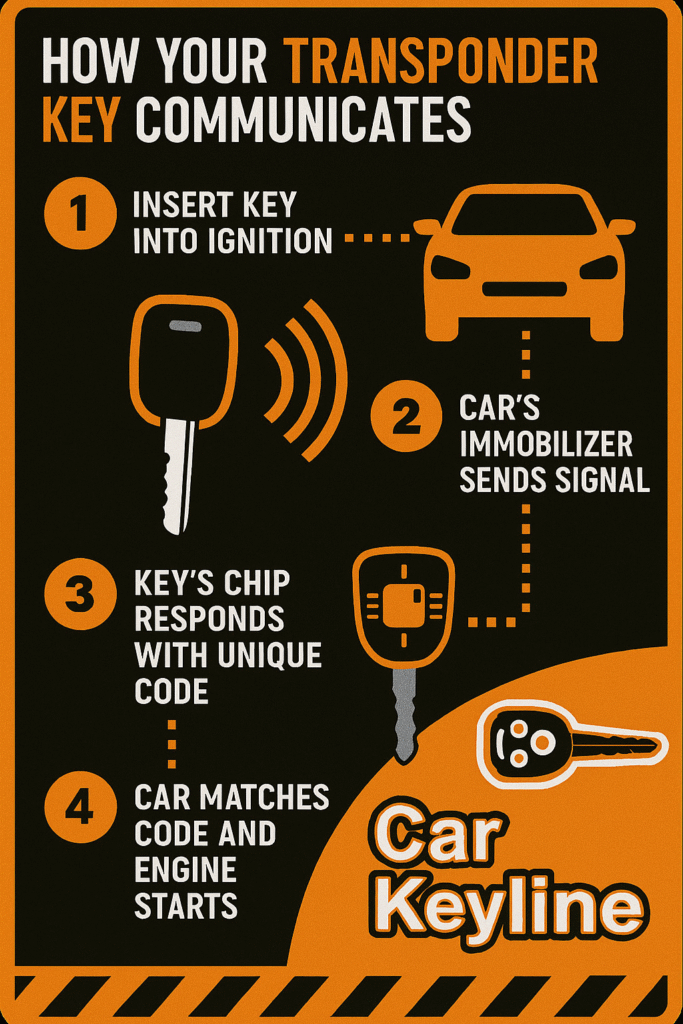
Here’s where the magic happens. When you insert your ignition key, the car’s immobilizer system sends out a ping. Your key responds with its unique code. If the codes match, the engine starts. If not, the system blocks access—protecting your car from unauthorized entry or theft.
This silent exchange of encrypted signals is what makes transponder technology so reliable. It’s like your car only answering to a secret password—one that’s baked right into your key.
How Do Transponder Keys Work?
Transponder keys are embedded with a microchip that transmits a signal from the key to the corresponding remote receiver. Programmed by the car’s maker with a serial number unique to that specific car, the microchip must be detected by the remote receiver (in the ignition) before it will allow the ignition to fire.
Transponder keys are intuitively smart. When the driver inserts the transponder key into the ignition, a signal goes out via radio frequency identification (RFID) technology. If the pre-programmed digital serial number in the key’s transponder chip does not match the serial number pre-programmed into the car, then it will not start. If it’s a match, the ignition will fire.
Why Do You Need a Transponder Key?
Transponder keys aren’t just a tech upgrade—they’re a security essential in today’s world. Unlike old-school metal keys, they don’t just unlock doors; they talk to your car and protect it from theft. That tiny chip inside adds a layer of personalized access that thieves can’t easily get past.
When it comes to transponder keys, the main emphasis is security, and there are two ways that transponders provide extra protection for car owners. First, they prevent and even deter car theft from “hot wire” events or from breaking the ignition lock, since neither of these methods works when a car uses a transponder key. Secondly, a standard ignition key has just a few standard cut combinations, making them easier to duplicate using a key-cutting machine. That is not the case with a transponder key, since it has a digital ID that is unique and cannot be duplicated.
Whether you own a single vehicle or manage a fleet, transponder keys offer real peace of mind. They make hotwiring nearly impossible, reduce duplication risks, and even lower the chances of lockouts. In short, they’re not just convenient—they’re a smart investment in your car’s safety.
Here’s Why It Actually Matters:
- Enhanced security through encrypted communication.
- Immobilizer system blocks engine without the correct key.
- Less chance of unauthorized access or easy duplication.
- Remote locking adds convenience on busy days.
- Better control for families or commercial fleets.
- Often lowers insurance premiums for theft-resistant vehicles.
Theft Prevention
The strongest reason to upgrade? Theft prevention. Transponder keys pair uniquely with your car’s ignition system, meaning no cloned key or hotwire trick can bypass it. Unless the chip code matches, the car simply won’t start—no matter how skilled the intruder is.
This personalized lock-and-key communication acts as a digital barrier, making your vehicle far less attractive to thieves looking for an easy target.
Fewer Lockouts and Duplication Risks
Transponder keys are also a game-changer when it comes to everyday convenience. They’re harder to duplicate, which keeps your vehicle safer when multiple people drive it—like in families or delivery teams.
Because of their smart tech, the chance of getting locked out or losing access is much lower than with regular keys.
How to Tell If Your Car Uses One
Not sure if your car key has a chip? You’re not alone. Many car owners carry around a transponder key and don’t even realize it. But knowing makes all the difference—especially when you’re trying to replace or duplicate one.
There are a few simple signs that can help you figure it out. Whether you’re holding a basic key or one with an embedded RFID chip, these clues can save you time and money. Some require a closer look; others need just a quick test.
- Plastic head with no visible electronics? Might still house a chip inside.
- Check the manual or manufacturer’s site for key type details.
- No start without the right key? Likely chip-protected ignition.
- Try wrapping the head in foil. If the car doesn’t start, it’s a transponder.
- Ask a locksmith to scan the key. It’s fast and accurate.
- Most new cars since the 2000s come with chip-based systems by default.
If you’re still unsure, a professional automitive locksmith or dealership can confirm your key type in minutes. Knowing this helps avoid surprise costs and protects your vehicle better
Replacement and Programming: What to Know
Losing a transponder key can feel like a dead end—but it’s not. Whether it’s misplaced, damaged, or just not working, you’ve got options. The key is knowing who to trust and what the process involves before jumping into the first expensive solution you find.
A trusted locksmith can help you get a replacement or duplicate transponder key. Not all locksmiths have the ability to program transponder keys, so it can be difficult and quite expensive to get a replacement if you don’t have a locksmith with the capacity for replacement or duplication. An alternative (albeit a costly one) is to get a new key from the dealership.
Getting a replacement doesn’t mean you’re stuck with the dealership. Local locksmiths often provide the same service—faster and more affordably. We also offer key fob programming Ewing Township to help you reprogram your car keys with ease. Just make sure to carry proof of ownership and know your vehicle’s VIN. That’s what unlocks the process, literally.
Where to Go: Locksmith vs Dealership
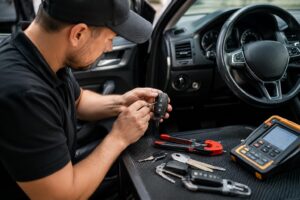
While dealerships can help, they’re usually slower and cost more. A professional locksmith, on the other hand, can come to you, program a new key on-site, and do it quicker. Many even offer emergency services for urgent lockouts or reprogramming on the spot. If you’re facing a lockout or need immediate help, our emergency car locksmith service is just a call away.
Cost Factors and Programming Steps
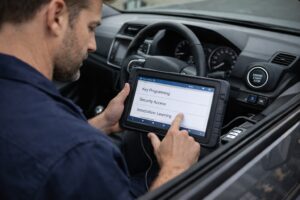
Prices vary depending on your car model, key type, and chip system. The process often includes cutting a blank key, syncing it with your ignition, and pairing it to the immobilizer system. Locksmiths use advanced tools to make it seamless and secure.
When DIY Isn’t an Option
Sure, DIY key kits exist—but they don’t always work. Most modern vehicles require encrypted syncing that only pro tools can handle. If you try and fail, you may end up locked out completely or cause damage to your vehicle’s electronic system.
Non-Transponder Keys – What’s the Risk?
Not all keys are built the same. Traditional metal keys may still start the engine, but they lack one major thing: protection. With no chip inside, they’re easy to duplicate—and just as easy to misuse. For modern cars, using one is like leaving your door wide open.
| Feature | Transponder Key | Traditional Metal Key |
| Security Level | High – encrypted chip & immobilizer | Low – No chip, easy to duplicate |
| Theft Protection | Strong – can’t hotwire | Weak – vulnerable to theft |
| Duplication Risk | Difficult to copy | Easy to copy |
| Cost | Higher upfront, saves on theft risk | Cheap upfront, risky long-term |
| Vehicle Compatibility | Standard in modern cars | Mostly older cars |
| Tracking/Pairing | Digital pairing with car | None |
Transponder keys come with built-in electronic chips that communicate directly with your car’s ignition. Metal keys don’t. That makes them vulnerable to theft, hot-wiring, or unauthorized use—especially in older models without advanced lock systems. In short, they work, but they’re risky.
Quick Facts to Understand the Risk:
- No electronic chip – Easy to copy and pass around.
- Minimal theft deterrent – No immobilizer to block unauthorized start-ups.
- Cheap, but costly – Upfront savings can cost more in the long run.
- Easily lost or stolen – With no digital tracking or pairing.
- Lacks secure pairing – Can’t communicate with your car’s security system.Often outdated – Many modern vehicles don’t even support them.
Frequently Asked Questions
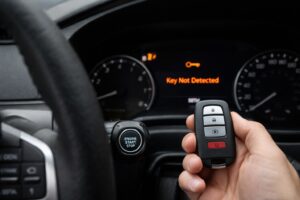
It’s a car key with a tiny chip inside that talks to your car’s ignition. If the chip isn’t detected, the car won’t start. It’s not just a key—it’s a built-in anti-theft device.
Nope. Without the chip, your ignition system won’t recognize the key. You’ll either need a backup or get a new one programmed by a professional locksmith or dealership.
Look for a thick plastic head or check your manual. You can also ask a locksmith—they’ll scan it and let you know in seconds.
Yes—way better. A regular key just turns the ignition. A transponder key verifies identity, blocks theft, and syncs with your car’s immobilizer system for added security.
Absolutely. A skilled auto locksmith can use your VIN and onboard diagnostics (OBD) tools to cut and program a brand-new transponder key—even if the original is gone.
We Can Help
Looking to replace your transponder key? In need of a car key battery replacement? Turn to Car Keyline for emergency locksmith services help from a trusted company that specializes in making car keys.
Final Thoughts: Smarter Keys, Safer Cars
Transponder keys aren’t just a modern upgrade—they’re a security essential. From preventing theft to giving you peace of mind every time you hit the ignition, this tiny chip makes a big difference. Whether you’re buying a new car or replacing a lost key, knowing how it works helps you make smarter choices.
If your current key doesn’t have a chip, or you’re unsure, talk to a professional locksmith. It’s better to be proactive than stranded—or worse, at risk of theft. In today’s world, your key should do more than just turn a lock—it should protect what matters.