Skip to content
On modern cars, a key isn’t just a piece of metal or a plastic fob—it’s part of the security system. That’s why using a non-OEM key can cause more than minor annoyance. In this guide, we’ll break down how aftermarket keys fail, how incorrect programming can trigger immobilizer or ECU errors, and what to ask before you buy or program a replacement key.
What Counts as a Non-OEM Key in Modern Cars
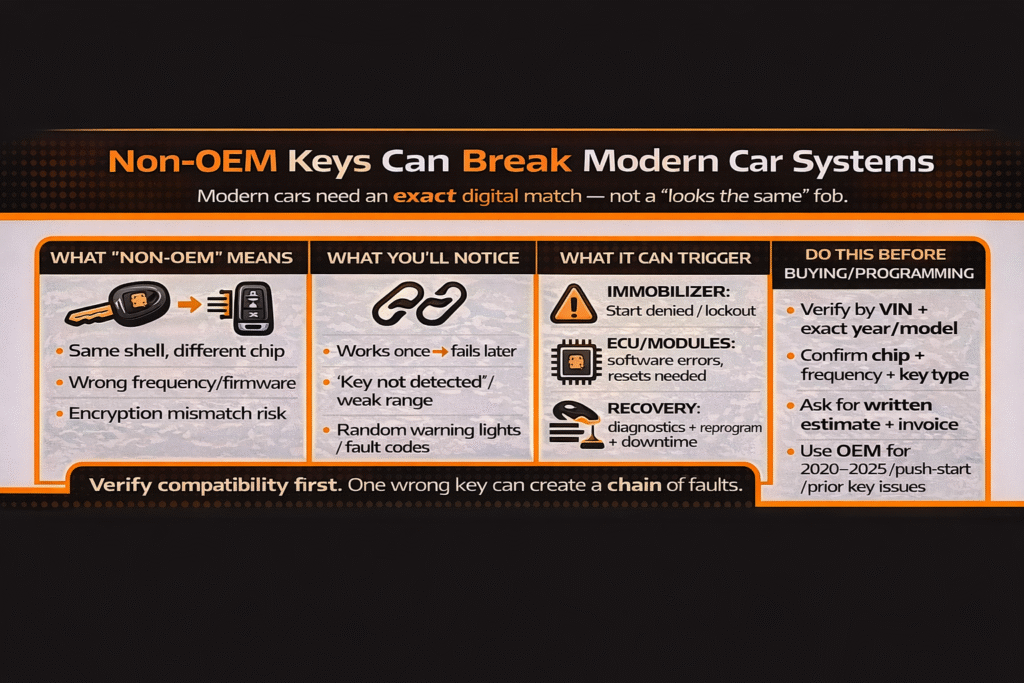
A non-OEM key is any key or fob not made to the same standard as the original factory key. It may look identical, but modern anti-theft systems care about chips, encryption, and software match. With today’s vehicle key system sensitivity, “close enough” often isn’t enough.
- OEM vs Aftermarket
OEM keys are built for exact system pairing; aftermarket keys vary in quality. - Looks Right, Works Wrong
Same shell doesn’t mean the same chip, signal, or encryption. - Security Integration
Keys are part of modern anti-theft systems, not just a way to turn the ignition. - Aftermarket Key Limitations
Some fobs won’t support full features or stable pairing. - Non-OEM Key Risks
Mismatch can trigger faults, lockouts, or unreliable starts. - Why OEM Is Safer
OEM key reliability reduces compatibility problems and car key programming headaches.
Where Aftermarket Keys Fail: Compatibility and Authentication
Most non-OEM compatibility problems come down to a simple mismatch: the car’s security system expects an exact digital “handshake,” but the aftermarket key can’t match it every time. That’s when you see smart key compatibility failure, key authentication mismatch, and diagnostic error codes that don’t make sense to the average driver.
Encrypted Authentication Mismatch
Modern anti-theft systems use encrypted rolling codes, so the key and car must agree on the next “code” in the sequence. With an encrypted authentication mismatch, the key may program, then fail later—classic “works once, then fails.” That’s where encrypted key mismatch issues and smart key authentication errors show up, often as a smart key handshake error.
Aftermarket Key Fob Failures
Even if the car starts, aftermarket key limitations can show up later in the remote and proximity functions. You might notice dropouts, weak range, or pairing instability, especially in push-to-start cars with high vehicle key system sensitivity. These aftermarket key fob failures often trigger new diagnostic error codes and leave you dealing with smart fob failures at the worst time.
How Incorrect Programming Can Trigger Immobilizer and ECU Errors
With modern cars, key programming isn’t just “adding a key.” A wrong profile or failed write can confuse the security system and trigger immobilizer and ECU errors. These non-OEM key programming risks can cause security system lockout, persistent faults, and even ECU damage from incorrect key programming—especially with incorrect transponder key data.
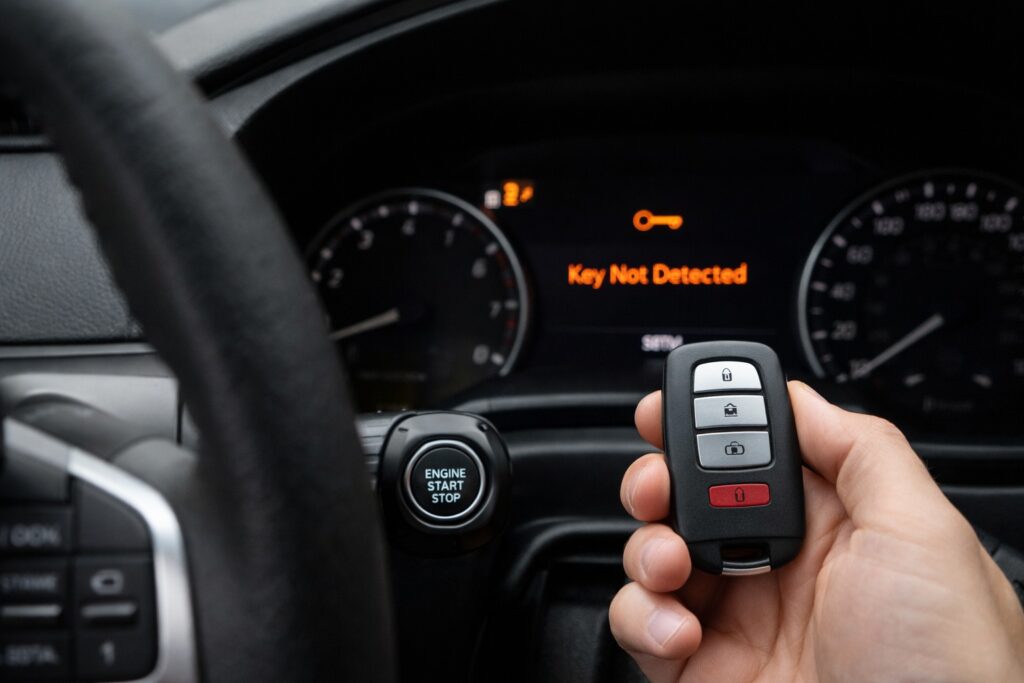
Immobilizer Failure and “Start Denied”
Immobilizer refusal usually starts with an authorization fail. The car sees the key, but won’t approve it, so the start is blocked. Repeat attempts can hit lockout thresholds and turn a simple start denied problem into an immobilizer lockout. This is a common sign of immobilizer failure due to aftermarket keys and modern car security system damage.
ECU and Vehicle Software Errors
Bad programming can also create broader ECU software errors. When modules receive the wrong data, you can get vehicle software corruption, module confusion, and diagnostic error codes that keep coming back. This is where non-OEM keys and vehicle software errors show up, and the cost can jump quickly if the vehicle key software issues require dealer-level recovery.
Why Manufacturers Restrict Key Programming
Car makers restrict key programming because the key is part of the anti-theft system, not just an accessory. Modern anti-theft systems use encryption and controlled procedures to stop cloning and unauthorized access. These manufacturer security restrictions are also why OEM key reliability is usually higher on newer vehicles.
- Anti-Theft Protection
Programming limits reduce the chance of key cloning and theft. - Encryption Governance
The car expects approved encrypted data, not “close enough” chips. - Security Policy
Access is controlled so random tools can’t rewrite key settings. - Controlled Procedures
OEM programming limits force step-by-step validation during pairing. - OEM Keys Are Safer
OEM keys match the system rules and reduce lockouts. - Manufacturer Key Restrictions
Restrictions protect the vehicle’s security and software stability.
The Real Recovery Cost When Non-OEM Keys Cause Damage
When a non-OEM key triggers faults, the “fix” is rarely just re-cutting a key. It often means dealership reprogramming after failure, module resets, and sometimes towing. The real hit is money plus vehicle downtime—because you lose access to your car while the system is being recovered.
- Dealer Reprogramming After Failure
A common next step when the car won’t accept any key. - Module Resets
Security modules may need a reset to clear bad data. - Dealer Reprogram Cost
OEM-level tools and procedures usually cost more than a standard callout. - Vehicle Downtime
You may be without the car for hours or days, not minutes. - Cost of Repairing Key-Related Damage
Fixing key programming damage can include diagnostics, parts, and labor. - How Aftermarket Keys Damage Car Systems
One wrong programming attempt can create a chain of issues across modules.
How to Avoid the Problem: What to Ask Before You Buy or Program a Key
The safest move is to treat key work like security work, not a bargain purchase. Verify the key source, confirm the programmer actually supports your exact vehicle, and ask for documentation or a warranty. Professional automotive locksmith expertise matters here because manufacturer security restrictions make modern systems unforgiving.
Signs You’re About to Get the Wrong Key
If someone makes vague compatibility claims, skips VIN-based verification, or pushes “universal” keys, slow down. Those are classic aftermarket key limitations and non-OEM key risks. This is where non-OEM key compatibility issues start, and it’s how to avoid aftermarket key mistakes before you pay for the wrong key for your car.
When You Should Use OEM (No Shortcuts)
OEM is the safer choice on newer models, high-security systems, and any car that’s already had programming trouble. With modern vehicle key system sensitivity, one bad attempt can lead to dealership reprogramming after failure. In these cases, OEM key reliability wins, and an OEM key recommended approach saves headaches later.
FAQs
Non-OEM keys are aftermarket keys or fobs that aren’t built to the same specs as the factory key. On modern cars, the key is part of the security system, so small chip or encryption differences can cause pairing problems, warning lights, or “key not detected” issues.
Non-OEM keys are aftermarket keys or fobs that aren’t built to the same specs as the factory key. On modern cars, the key is part of the security system, so small chip or encryption differences can cause pairing problems, warning lights, or “key not detected” issues.
That usually points to an encrypted authentication mismatch. The key may pair initially, but rolling codes or handshake steps don’t stay in sync, so the car starts rejecting it. You’ll often see intermittent starting, remote dropouts, or new fault codes.
Be cautious if the seller won’t verify by VIN, claims the key is “universal,” or can’t explain which chip and frequency it uses. If they won’t provide documentation, warranty, or clear compatibility details, the risk of a mismatch goes up fast.
Manufacturers restrict key programming to protect modern anti-theft systems. Encryption, security policies, and controlled procedures reduce cloning and unauthorized access. These restrictions are also why OEM keys tend to be more reliable on newer vehicles.
Conclusion
Non-OEM keys can look like an easy shortcut, but modern cars don’t treat keys like simple hardware. When the chip, encryption, or programming isn’t an exact match, you can end up with immobilizer lockouts, ECU faults, and expensive recovery steps like module resets or dealer reprogramming. If you want fewer surprises, verify compatibility, ask the right questions, and choose OEM when the system is strict.