Skip to content
It happens fast. You reach for your keys, and they’re not there. Maybe it’s a push-start car key lost at the store, or you’re standing outside your vehicle at night, wondering what to do next. With 2020–2025 cars, a lost key is not just a “cut a new one” problem. Newer vehicles in Burlington, NJ, use modern car key technology, which means smart key replacement often involves programming and security steps, too.
This guide walks you through what to do in plain language. You’ll learn how modern car keys work, which replacement path fits your situation, and how to protect your vehicle after the loss. By the end, you’ll know how to replace a lost key fob safely, avoid common mistakes, and set up a simple spare plan so you’re not stuck again.
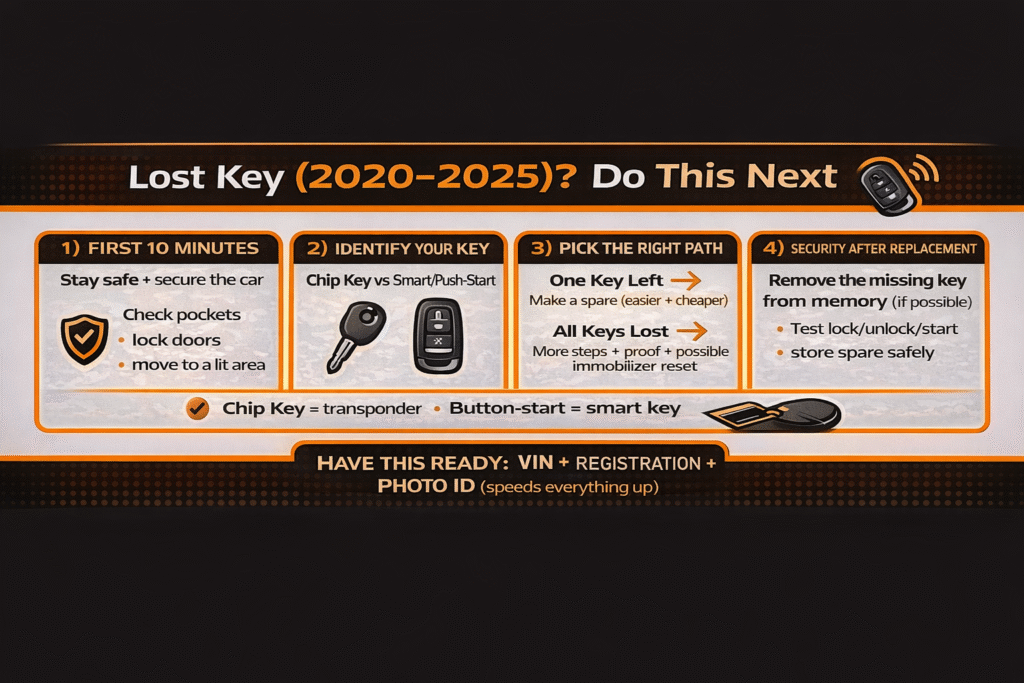
First 10 Minutes: What to Do (So You Don’t Make It Worse)
In the first 10 minutes, your job is to stay calm and avoid making the problem bigger. When you lose a car key on a 2020–2025 vehicle, rushing can increase car key security risks, especially if the key is missing in a public place. Think consumer safety first: confirm the key is truly lost, keep your vehicle secure, and get your details ready for the ownership verification process.
- Confirm the loss: Check pockets, bags, and the last place you used it (lost car key what to do starts here).
- Check the car: Make sure doors are locked, and nothing looks tampered with.
- Move to safety: If it’s a lost car key at night, stay in a lit area and avoid waiting alone.
- Protect access: Don’t share your exact location until you trust the provider.
- Gather details: VIN (dashboard), year/make/model, and your registration info.
- Plan for verification: Expect ID + proof of ownership during key replacement.
What Kind of Key Do You Have? (2020–2025 Quick ID)
Before you call anyone, figure out what type of key your car uses. This matters because it changes the tools, the time, and the cost. Most 2020–2025 vehicles fall into two common groups: a transponder key (chip key) or a proximity/smart key for push-start systems. Once you know the type, it’s easier to explain the problem and get the right help without guessing. This is the simplest way to understand how modern car keys work.
A quick clue: if your car starts with a key turn, it may be a chip key. If it starts with a button and the fob just needs to be nearby, it’s usually a smart key. Some cars also have an emergency blade inside the fob, but that doesn’t change the main system.
Transponder Key (Chip Key)
A transponder key looks like a normal car key, but it has a small chip inside. That chip must match your car’s system or the engine won’t start. So replacing it is usually a two-part job: cut the key to fit the lock and program the chip to fit the car. This is why transponder key replacement is not the same as copying a basic house key.
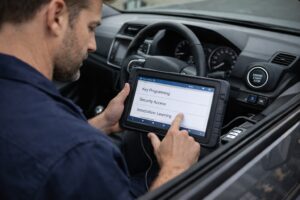
If you still have one working key, chip key replacement is often easier because the car can “learn” a new key with the right steps and tools. If you lost all keys, it can take more work because the system needs to be set up from scratch. Either way, key fob programming may still be part of the job depending on your model.
Proximity / Smart Key (Push-Start)
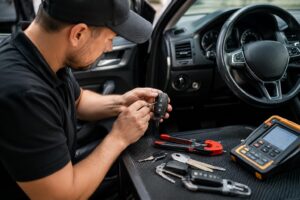
A proximity or smart key is used with push-start systems. You don’t insert it into the ignition. The car senses the fob nearby, then lets you start the vehicle with a button. This system is safer, but it’s also more complex. Smart key replacement for 2020–2025 vehicles usually needs special programming tools because the car has to “pair” the new fob to the vehicle.
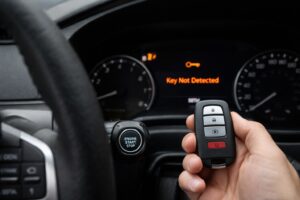
When a push-start car key is lost, the goal is not just to make a new fob. It’s also to protect you from a missing key being used later. That’s why proximity key programming often includes steps that connect the fob to the immobilizer system, and sometimes remove old keys from memory. In some cases, immobilizer reprogramming is needed, especially when all keys are lost.
Replacement Paths: One Key Left vs All Keys Lost
The fastest way to solve a lost key problem is to pick the right path. With 2020–2025 vehicles, your time, cost, and security outcome changes a lot depending on one thing: do you still have a working key or not? If you have one, replacement is usually simpler and cheaper. If you lost all car keys, it often takes more steps, more proof, and higher key replacement costs.
Either way, expect an ownership verification process. A legitimate provider will ask for ID and proof of ownership before making a key, because the wrong key in the wrong hands is a real security risk. This also helps you avoid wasted time during no spare key replacement calls.
If You Still Have One Working Key
If you still have one working key, this is the easiest and lowest-cost path. Your best move is to duplicate it now, not later. A new key or fob can usually be added with fewer steps because the vehicle can confirm a trusted key already exists. That means faster key fob programming and less chance of needing deeper system work.
This is also where spare key recommendations matter most. Make the spare while things are calm, test it right away, and store it safely. A simple “make spare key fob” plan can stop the next lockout from turning into a bigger bill and a bigger headache.
If You Lost All Car Keys
If you lost all car keys, it’s the highest-risk path and it usually takes more steps. The provider may need your VIN, your registration, and photo ID for the ownership verification process. Once access is handled safely, the next challenge is getting the car to accept a new key when there’s no working key left to “introduce” it. That’s why replace key with no original work can cost more.
On many 2020–2025 push-start vehicles, reprogramming car keys after loss can involve immobilizer system reset steps. In tougher cases, immobilizer reprogramming and ECU synchronization may be needed so the vehicle security system recognizes the new key. The goal is not just to start the car—it’s also to make sure the missing key can’t be used later.
Dealer vs Locksmith for 2020–2025 Vehicles (What Changes)
With 2020–2025 cars, the real issue is not just cutting a key. It’s programming the fob to the vehicle’s security system using the right tools and steps. So when people compare dealer vs locksmith key replacement, what changes most is wait time, towing, total cost drivers, and convenience. Dealership key replacement can be a solid choice, but it often comes with scheduling delays and may require the car to be brought in.
A mobile automotive locksmith can often come to you and handle key fob programming on-site, which can save towing and time—especially when you’re stuck in a parking lot or at home. The “best” option depends on your vehicle, whether you have one working key left, and how quickly you need a working key again. Either way, choose the provider who can explain the process clearly and follows professional locksmith standards.
Quick Comparison Table (2020–2025 Vehicles)
| What changes | Dealership key replacement | Mobile automotive locksmith |
| Tools & capability | Usually has OEM tools for that brand; may be limited by appointments | Often has advanced programming tools for many makes/models; confirm your exact year/model |
| Availability | Business hours + booking delays are common | Often faster scheduling; comes to your location |
| Towing risk | More likely if all keys are lost or the car won’t start | Often avoids towing because service is on-site (depends on model and situation) |
| Wait time | May need to order a fob and schedule programming | May complete same day if fob is available and programming is supported |
| Cost drivers | OEM part pricing + towing + dealer labor rates | Travel/service call + programming + fob type; towing often avoided |
| Proof you should ask for | Written estimate, timeline, and what documents you need | Clear quote range, what could change it, and confirmation they follow professional locksmith standards |
Ownership Verification (What You’ll Need Ready)
When you lose a key on a 2020–2025 vehicle, a legit provider should not “just make a key.” They should confirm that you own the car first. Vehicle ownership verification for key replacement protects you from theft and protects the locksmith from making keys for the wrong person. It also speeds up the job because once your documents are ready, there’s less back-and-forth and fewer delays.
Most of the identity verification process is simple. You’re just proving two things: you are you, and the vehicle is yours to access. If you’re dealing with a rental or fleet vehicle, the rules can be stricter, so it helps to know that upfront.
- Photo ID: Driver’s license or another valid ID
- Vehicle proof: Registration (or title/insurance paperwork, depending on your region)
- VIN: Found on the dashboard near the windshield or inside the door frame
- Proof of address (sometimes): Helpful if documents don’t match your current address
- Rental/fleet rules: You may need written authorization from the company
- Good tip: Ask what proof for key replacement they require before you share your location, so you can verify ownership with the locksmith without stress
Security Steps After a Loss (So the Missing Key Can’t Be Used)
After you get a new key, don’t stop there. A lost fob can still be a risk if someone finds it and knows where your car is. The goal now is simple: reduce vehicle security risks by making sure the missing key no longer works. On many 2020–2025 vehicles, that means updating what the car “recognizes” as an approved key, not just cutting a new one.
This is where reprogramming car keys after loss matters. A proper provider can often remove a lost key from the car memory and reprogram the key fob after loss, so only your current keys work. In some cases, immobilizer reprogramming is part of the process, especially when all keys were lost or theft is a concern.
- Delete the missing key: Ask if the car can remove the lost key from the car memory
- Reprogram approved keys: Make sure the new key is programmed and tested fully
- Confirm start + lock functions: Test unlock, lock, trunk, and push-start before they leave
- Check door lock condition: If the key was stolen, inspect locks for tampering or weakness
- Secure your spare: Store the spare in a safe place, not inside the car
- Add a simple backup plan: Use a tracker on your main keys to lower repeat loss risk
Cost Drivers for Newer Vehicles (What Impacts the Price)
For 2020–2025 vehicles, the price is rarely “just a key.” Most of the cost comes from the key type and the programming work behind it. That’s why car key replacement cost newer cars can vary a lot from one car to the next. A smart key replacement usually costs more than a basic chip key because the system has to pair the fob to the vehicle’s security setup.
The biggest price jump often happens when there’s no working key left. “All keys lost” jobs usually take more time, more steps, and more programming complexity. OEM vs aftermarket parts can also change the total. OEM fobs can cost more, while aftermarket options can be cheaper but must match the car and program correctly to be reliable.
- Key type: Smart key replacement usually costs more than a transponder key
- All keys lost: No spare often means more steps and higher key replacement costs
- Programming complexity: Key fob programming cost rises when security pairing is harder
- OEM vs aftermarket: OEM may cost more; aftermarket must be compatible and reliable
- Vehicle make/model: Some 2020–2025 systems take longer to program than others
- Service setup: Mobile service vs towing can change the total cost, even for the same key
Make a Spare Key the Right Way (Simple Plan)
The cheapest time to make a spare is when you still have one working key. Once you lose the last key, the job often turns into a bigger process with more steps and higher costs. A simple spare key creation plan keeps you out of that situation and gives you a calm backup when life gets busy. This is one of the best spare key recommendations for 2020–2025 vehicles.
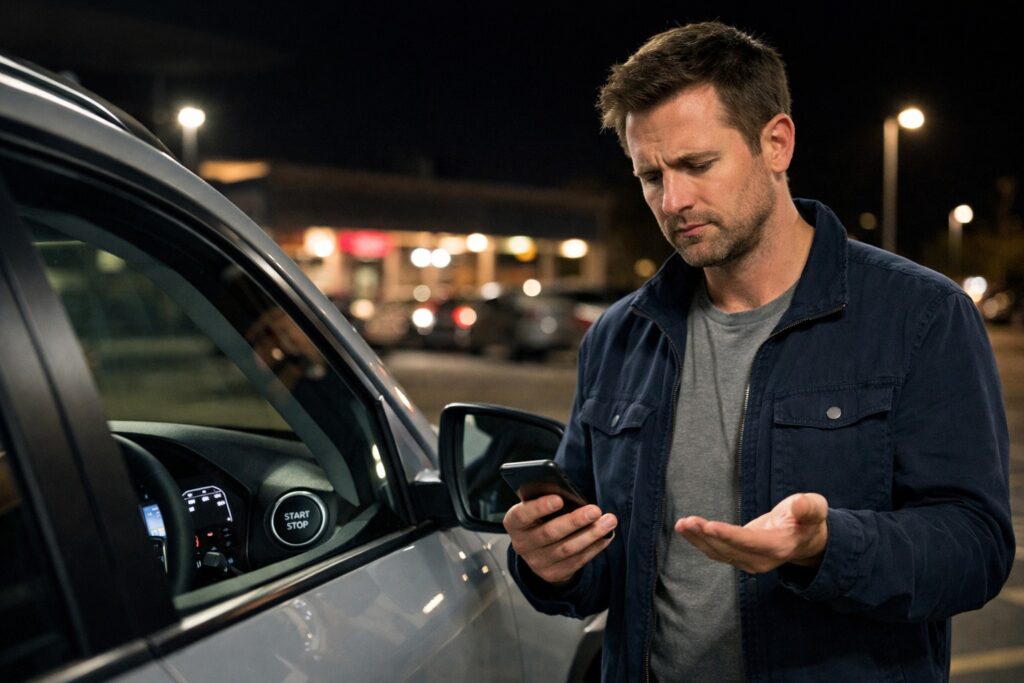
The goal is not to collect keys. The goal is to have one tested spare that’s stored safely and easy to find when you need it. If your car uses a smart key, make sure the spare is fully programmed and works for lock, unlock, and start.
- Do it now: Make the spare while you still have a working key
- Test it fully: Lock, unlock, trunk, and start should all work
- Store it smart: Keep it at home in a safe spot, not in the car
- Label it: Note the vehicle name/model so you don’t mix keys later
- Add a tracker: Helps prevent future loss and saves time
- Build a backup key plan: Decide who holds the spare and how you’ll access it quickly
FAQs
If you lost your car key, start by confirming it is truly missing, then secure your vehicle and move to a safe place. Gather your VIN, registration, and photo ID so you are ready for the ownership verification step. This is the safest way to handle a lost car key, and what to do without increasing car key security risks.
A locksmith can often replace a key for a 2020–2025 push-start car if they support your make and model and have the right programming tools. Push-start key lost cases usually need key fob programming so the vehicle recognizes the new smart key. A legit provider will also verify ownership before they begin.
If you lost all car keys, the job usually takes more steps because there is no working key left to add a spare from. The provider may need to unlock the car, confirm ownership, and then program a new key to the immobilizer system. This is why “no spare” jobs often cost more and take longer.
Dealer vs locksmith key replacement depends on time, towing, and availability. Dealers may have longer wait times and may require the car to be brought in. A mobile locksmith may come to you and program on-site, which can reduce towing and downtime. The best choice is the provider who can clearly explain the process for your exact vehicle.
Key fob programming pairs the new fob to your car’s security system so it can lock, unlock, and start the vehicle. On many newer cars, the immobilizer system only allows the engine to start when it recognizes an approved key. That is why programming is a required step for many 2020–2025 key replacements.
Conclusion
Losing a car key on a 2020–2025 vehicle is stressful, but it’s fixable when you follow the right steps. Start with safety, figure out your key type, then choose the correct replacement path based on whether you have a spare. Use ownership verification as a trust signal, not a hassle, and don’t forget the security step of removing the missing key from the car when possible. Once you’re back on the road, make a tested spare and store it safely—because the easiest key replacement is the one you never need again.