Skip to content
Not every locksmith can program new car keys for 2020–2025 models, and that’s not an insult—it’s just how modern cars are built. Today’s car key programming is tied to tighter 2020–2025 vehicle security, which means the job depends on the right tools, the right software access, and the right coverage for your specific make and model. That’s why people search “can any locksmith program car keys” and get mixed answers.
If you’re trying to get a spare made or you’ve lost your only key, the best move is to ask the right questions early. A shop with professional automotive locksmith expertise will explain what they can do, what they can’t, and what information they need from you before dispatch. That transparency matters because locksmith key programming limitations are real on newer cars, and guessing wastes time, money, and callouts.

The Truth In One Sentence (Then The Real Answer)
Not every locksmith can program new car keys for 2020–2025 models—only those with the right tools, access, and make/model coverage. That’s why some locksmiths can’t program new car keys even if they’re great at traditional locks.
Also, “program” can mean different things: basic transponder key systems may handle unlock and start, while smart key programming adds proximity features like passive entry and push-button start. So when you ask, “Can a locksmith program a new key?” or “program a key fob,” you’re really asking which functions you need—and whether that locksmith has the capability to deliver all of them.
- Define “Program”: Unlock only, start authorization, or full proximity smart key.
- Key Type Matters: Transponder key vs smart key programming are not the same job.
- Capability Isn’t Universal: Locksmith capability limits depend on tools and access.
- Some Keys Need More Access: Newer systems may require approved pathways.
- Ask For The Outcome: “Will it start the car?” is different than “will it unlock?”
- Verify Before Dispatch: Confirm your year/make/model and key type upfront.
What Changed In 2020–2025 Key Systems
From 2020–2025, car keys stopped being “just a chip” and became part of advanced car key security systems. That shift is the main reason modern car key programming challenges keep growing. Newer cars use tighter software control, stronger encryption, and more checks before they accept a new key.
The big changes are OEM security gateways, encrypted key data, and stricter pairing rules that limit who can access programming functions. Add extra validation steps for proximity and push-start, and you can see why newer car keys are harder to program compared to older transponder-only setups. It’s not drama—it’s modern anti-theft systems doing their job.
- OEM Security Gateways: Programming access is more controlled and often authenticated.
- Encrypted Car Key Systems: Data exchange is harder to copy or “force.”
- Stricter Pairing Rules: The vehicle decides what keys get added and when.
- More Validation Steps: Unlock isn’t enough—start and proximity must pass checks.
- Higher Tool Requirements: Not every tool supports every make, year, or system.
- Less Room For Shortcuts: Security updates reduce old methods that used to work.
Why Some Locksmiths Can’t Program 2020–2025 Keys
Here’s the simple truth: locksmith key programming limitations aren’t always about skill—they’re usually about access, coverage, and the vehicle’s security rules. On 2020–2025 cars, key programming is tied into multiple systems, so one missing piece can stop the whole job. That’s why you’ll hear “we can’t do that model” even from experienced shops. The common blockers are key programming compatibility issues, vehicle-specific software access gaps, and situations that require dealer-level diagnostics.
Think of it like five separate gates. If a locksmith can’t pass even one gate—right key type, correct match, security access, immobilizer acceptance, and final validation—the key won’t fully program. And on newer models, the locksmith equipment requirements for new models are higher because vehicle-specific key programming tools don’t cover everything.

Key Type Matters (Transponder Vs Smart/Proximity)
A transponder chip key and a proximity key are not the same job. Transponder key systems are often simpler: the car reads a chip, approves it, and you’re done. Smart key programming is stricter because it controls more than “start.” It can control proximity entry, push-button start, and other permissions the car treats as higher risk. That’s why smart key programming requirements are tighter, and why a locksmith who can program older transponders might still struggle with newer proximity setups. If the vehicle uses a more advanced smart system, you need tools and procedures built for that exact security level—not a “one tool fits all” approach.
Compatibility Issues (The Key Has To Match The Car)
A wrong fob is a dead end, even if it looks identical. Key programming compatibility issues come from specs people don’t see: chip type, frequency, firmware, and whether the key is built to match that specific model and year. On newer cars, encrypted key data also matters—if the key can’t communicate in the way the car expects, it won’t enroll cleanly. This is why “cheap online fobs” cause so many failures. A compatible key fob must be the correct spec key for that vehicle, not just the right shape. Pros check compatibility first, because programming can’t fix the wrong hardware.
OEM Security Gateways (Access Isn’t Always Open)
Many 2020–2025 vehicles use OEM security gateways that limit who can enter programming mode. In plain words: the car may require authenticated programming access before it will even allow key learning. That’s where encrypted car key systems and immobilizer system restrictions come into play. If a locksmith doesn’t have the right security gateway access, the tool can connect but still can’t perform the job. This is one of the biggest reasons “some locksmiths can’t program new car keys” on newer models—it’s not just the tool, it’s the permission. Some jobs are simply blocked without the right access pathway.
Immobilizer And ECU Pairing (The Car Must “Accept” The Key)
Even with the right key and the right access, the car still has to approve the new key. Immobilizer and ECU pairing is the vehicle’s way of saying, “Only trusted keys can start me.” That’s why immobilizer system restrictions are a big deal, especially when all keys are lost. With a working key present, some cars allow an easier add process. Without one, the security process escalates and may require deeper steps, sometimes reaching dealer-level diagnostics territory depending on the vehicle. People call it key pairing, but the real point is trust: the immobilizer ECU pairing has to accept the new credential, or the car will refuse to start.
Validation And Start Authorization (Unlock Isn’t The Same As Start)
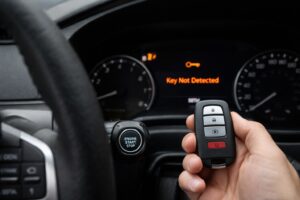
A key that unlocks the doors isn’t automatically a key that can start the car. Start authorization is a higher-security event, so advanced car key security systems run more checks before allowing it. This is where proximity validation and push-start checks can expose incomplete programming. You’ll see it in real life: the fob works for lock/unlock, but the car says “key not detected” or won’t crank. That’s not random—it means the validation steps for smart key programming requirements weren’t fully met. A proper job confirms both sides: the convenience functions and the start permission, repeatedly, not just once.
Dealer Vs Locksmith Key Programming (Best Option By Scenario)
| Scenario | Best Fit (Most Cases) | Why | What To Ask Before Booking |
| Add A Spare Key (You Have One Working Key) | Specialist Locksmith | Lower security escalation; common workflow with advanced locksmith tools | “Do you support my make/model/year and key type?” |
| Replace A Lost Key (You Still Have One Key) | Specialist Locksmith | Usually manageable if the correct fob and tool coverage exist | “Can you confirm compatibility before dispatch?” |
| All Keys Lost | Depends | Higher security steps; may need deeper access or dealer-level diagnostics | “Have you done all keys lost on this model before?” |
| Security/Module Faults (No Start, Errors, No Learn Mode) | Dealer | Dealership programming vs locksmith split shows here—module-level diagnosis is dealer strength | “Can you run full diagnostics and confirm the fault?” |
| OEM Security Gateway Blocks Programming | Depends (Often Dealer) | If authenticated access is required, some locksmiths can’t proceed | “Do you have security gateway access for this vehicle?” |
| OEM-Only Parts / Restricted Key Supply | Dealer | The dealer can source and validate OEM components more directly | “Is the fob restricted for this model/year?” |
What To Ask Before You Book (So You Don’t Waste A Callout)
Before you book, do a quick screening call. It saves you money and stops the “we can’t do that model” surprise at your driveway. Newer cars have locksmith equipment requirements for new models, so you want proof they actually support your exact vehicle—not a generic yes.
A locksmith who programs new keys should be able to answer simple questions clearly. If they can’t, you’re likely wasting a callout.
- Make / Model / Year: Give the exact details up front, not “it’s a Toyota.”
- Key Type: Ask if it’s a smart key or a transponder and if they program that type.
- All Keys Lost or Spare Available: This changes the whole workflow and difficulty.
- Tool Coverage: Confirm their vehicle-specific key programming tools support your model.
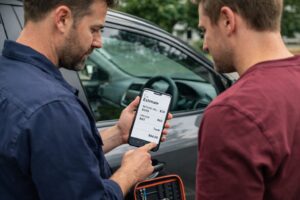
- Written Estimate Policy: Ask for a written estimate before any work starts.
- Proof of Capability: “Have you programmed this year/model before?” helps verify locksmith key programming.
What Drives Cost And Time (Without Guessing Prices)
With 2020–2025 vehicles, cost and turnaround aren’t random—they follow the work. Modern vehicle key programming challenges add steps, checks, and sometimes extra sourcing that older cars didn’t need. That’s why two “key jobs” can look similar on the surface but have very different programming time and replacement cost drivers once you factor in security and compatibility.
The safest way to understand pricing is to look at the real inputs: parts availability, access requirements, how long programming takes, the risk of rework, and whether you’re in an all-keys-lost situation. Compatibility by make and model is the thread that runs through all of it.
Parts Availability (Getting The Right Key/Fob)
A big driver is simply getting the correct key or fob in hand. Not every key blank or smart fob is interchangeable, and compatibility by make and model matters more on newer vehicles. If the correct part is common and readily available, the job starts faster. If it’s restricted, backordered, or requires an exact OEM spec, time and effort go up. This isn’t about “expensive for no reason.” It’s about avoiding the wrong part, because the wrong part wastes time and triggers more modern vehicle key programming challenges—failed attempts, extra diagnostics, and sometimes repeat visits.
Access Requirements (What The Car Will Allow)
Newer vehicles often control programming through tighter access rules. If the car requires authenticated access, security gateway approval, or deeper system permissions, that can add steps before the key can even be introduced. In simple terms: the car may not let the tool do the job until the right access pathway is established. That’s why programming time varies so much between makes and models. Access requirements are one of the biggest replacement cost drivers because they decide whether the job is straightforward or whether it needs advanced handling, extra verification, or sometimes dealer involvement for specific cases.
Programming Time (The Actual Work In The Vehicle)
Programming time is not just “plug in, press a button.” On 2020–2025 cars, the process can include pairing, waiting cycles, validation checks, and confirming start authorization and proximity behavior. Some vehicles accept the key quickly. Others require multiple stages and confirmation steps to make sure the new key is trusted. This is where modern vehicle key programming challenges show up in real life: you’re not only adding a key, you’re proving it works reliably. The more steps required, the longer the job takes, and the more the final cost is driven by time and specialized effort.
Rework Risk (When The First Attempt Fails)
Rework is a hidden cost driver most owners don’t see. If the key is the wrong spec, the vehicle rejects the programming, or the system behaves inconsistently, the job can turn into troubleshooting. That adds time because the tech has to confirm what failed and why, then correct the cause—not guess. On newer models, compatibility by make and model is often the reason rework happens. Rework risk is also why experienced pros ask more questions up front. A clean first-time result is cheaper and faster for everyone than repeated attempts that burn time and create uncertainty.
All-Keys-Lost Complexity (Highest Effort Scenario)
When you have no working keys at all, everything gets harder. The vehicle often requires stricter security steps because there’s no trusted key to “introduce” the new one. That can increase programming time, parts dependency, and verification work. It’s also the scenario where modern vehicle key programming challenges are most noticeable because security systems are designed to resist unauthorized key additions. From a locksmith point of view, all-keys-lost jobs are not just key cutting and pairing—they’re full recovery workflows. That’s why this scenario is one of the biggest replacement cost drivers, even without quoting any prices.
FAQs
No, not any locksmith can program car keys for 2020–2025 models. New car key programming depends on the vehicle’s security system, the key type, and whether the locksmith has the right tools and access for that exact make and model. This is one of the biggest locksmith capability limits people run into with newer cars.
Because experience alone doesn’t unlock modern systems. Many 2020–2025 vehicles use tighter security, model-specific procedures, and software access limits. If a locksmith’s tools don’t support your vehicle or the system requires a gateway-style permission, they may not be able to complete programming—even if they’re great at older models.
Sometimes, yes—but it depends on the brand, the key type (smart/proximity vs transponder), and tool coverage. If you’re trying to program a new key 2023/2024/2025, the locksmith must confirm compatibility before dispatch. A quick phone check can save you from wasted callouts.
A transponder key usually focuses on start authorization with a chip. A smart key fob adds proximity features like passive entry and push-button start, which means more security checks and stricter programming rules. That difference is why newer smart keys are often harder to program.
In many cases, yes, but “all keys lost” is the highest complexity scenario. The car may require stricter security steps before it will accept a new key. Some cases are fully locksmith-capable, while others may depend on dealer-level diagnostics or OEM access. The best move is to explain upfront that you have no working keys.
Conclusion
The truth is simple: for 2020–2025 models, car key programming is not a universal locksmith service. It depends on your vehicle’s security setup, the key type, and whether the provider has the right tools and access for your exact make and model. If you want to avoid wasted callouts, lead with the basics—year, make, model, and whether you have a working key—and choose someone who’s clear about capability limits and process. That small bit of upfront checking usually saves the most time and money later.